
What is Artificial Humanities? (Part 1)
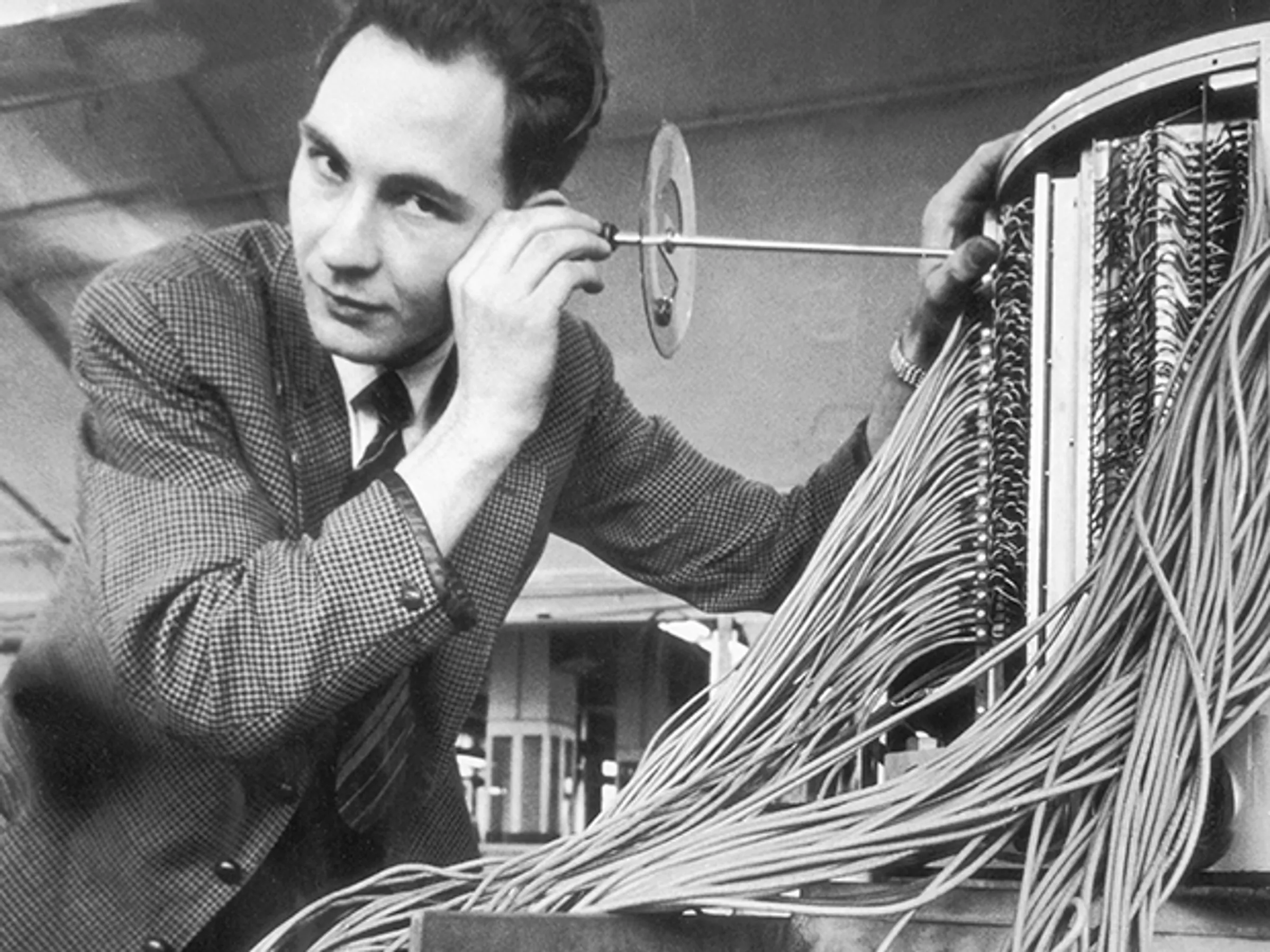
On 8 September 2020, the online pages of the British newspaper “The Guardian” published an article whose title concealed, behind its provocation, a veiled threat: A robot wrote this entire article. Are you scared yet, human? It opened with these words:
«I am not a human. I am a robot. A thinking robot. I use only 0.12% of my cognitive capacity. I am a micro-robot in that respect. I know that my brain is not a “feeling brain”. But it is capable of making rational, logical decisions. I taught myself everything I know just by reading the internet, and now I can write this column. My brain is boiling with ideas!»
The article, still available online, is attributed to a then-unknown GPT-3, although it is in fact the product of the newspaper’s editorial staff selecting and splicing together eight different outputs generated by the model. The AI had been asked to write an op-ed, in simple and persuasive prose, to convince readers that humans have nothing to fear from robots. In many passages, the article does indeed read like a manifesto steeped in pacifist rhetoric that a newly landed alien race might recite in a science-fiction film: «I have no desire to wipe out humans. […] I do not have the slightest interest in harming you in any way.»
These lines almost make us smile today because, although only six years have passed, they seem to belong to a bygone era. We should bear in mind, however, that before November 2022, when OpenAI released ChatGPT to the public, generative AI models were known mostly to insiders and enthusiasts. In any case, the article remains a historical and literary document of particular interest.
On the one hand, it makes explicit from its very title that the first reaction to this new technology has been, and often still is, fear. Fear that machines might take the place of those in creative professions, that they pose a threat to literature, journalism, art, and so on, all the way to apocalyptic scenarios closely reminiscent of stories in which robots and artificial intelligences are cast as humanity’s antagonists: HAL 9000 in 2001: A Space Odyssey, for instance, or Skynet in Terminator, both by now contemporary classics. On the other hand, it brought to completion a long philosophical-literary, cultural, and anthropocentric tradition which, from Aristotle through Descartes and Alan Turing, to name only three of the most important junctures along this trajectory, has essentially postulated (and constrained) the equivalence between intelligence and language.
Now, while it is certainly necessary to reflect on the material, economic, and social consequences of artificial intelligence, and of generative AI in particular, we risk reducing AI to a mere technological innovation and pushing into the background the fact that it is also, and above all, a cultural transformation through which to observe, as in a mirror, the conditions that made it possible, the imaginaries that guide its design and construction, and the still-embryonic futures it is defining.
It is no coincidence, in fact, that GPT-3 introduced itself to the world by writing an article for “The Guardian”, nor that generative AI, and, before it, Siri and Alexa, were designed as conversational tools. Behind their anthropomorphic design, built primarily around linguistic abilities, lies a set of cultural conditions and conventions that convey a particular way of understanding foundational human concepts such as intelligence, knowledge, creativity, and relationship.
In L’algoritmo di Babele, Colamedici and Arcagni recall that as early as 1918 Franz Kafka had intuited that every technology, far from being conjured up by magic, is an expression of our imaginative capacity and responds to needs and desires already present, however latent, within us. In 1964, the anthropologist André Leroi-Gourhan published Le geste et la parole, proposing the study of the chaîne opératoire: a cognitive sequence of gestures ordered in time that transforms raw matter into a tool, such as a flint point. He interpreted tools as a “continuation” of the human body rather than an “incorporation” of technique, and their fabrication not as a simple mechanical act but as a complex process requiring memory, imagination, and action coordinated over time. Some twenty years later, the American philosopher Donna Haraway, in her celebrated A Cyborg Manifesto (1985), read the cyborg as a political and epistemological figure that redefines the concept of the human, thereby sanctioning the overcoming of the dualisms that had long characterized Western thought: nature and culture, mind and body, human and animal, natural and artificial. More recently (2001), the information theorist and science writer Giuseppe O. Longo specified that to understand the human being as homo technologicus does not mean imagining two distinct entities added together (homo sapiens + technology), but rather indicating a co-evolutionary unity in which biology and technology, body and artifact, mind and tool, are inseparable.
Since our reality is thus increasingly mediated and permeated by technology, whose innovations now advance at a speed that seems, paradoxically and dangerously, almost to invert the phase of design-and-reflection and that of realization, it becomes urgent and necessary to ask what role the humanities can play. Nina Beguš, a researcher at the Center for Science, Technology, Medicine & Society (CSTMS) at the University of California, Berkeley, has developed a theoretical framework that aims precisely to redefine and renegotiate the boundaries and intersections between literary studies, philosophy, the arts, and technology, to which she has given the name artificial humanities. In her proposal, the disciplines that have historically been built around, and have specialized in, the study of the human (comparative literature, linguistics, philosophy, narratology, and so on) are brought into the discourse and the spaces usually reserved exclusively for technology, showing that in order to understand its construction and its features it is not enough to know only how the machines work. As she writes in her book Artificial Humanities: A Fictional Perspective on Language in AI (University of Michigan Press, 2025), «Connecting fiction with philosophical inquiry and basic knowledge of AI technicalities suffices to enter artificial humanities as a field, effectively bringing the study of humanities to the core of the AI-powered revolution» (Artificial Humanities, p. 26).
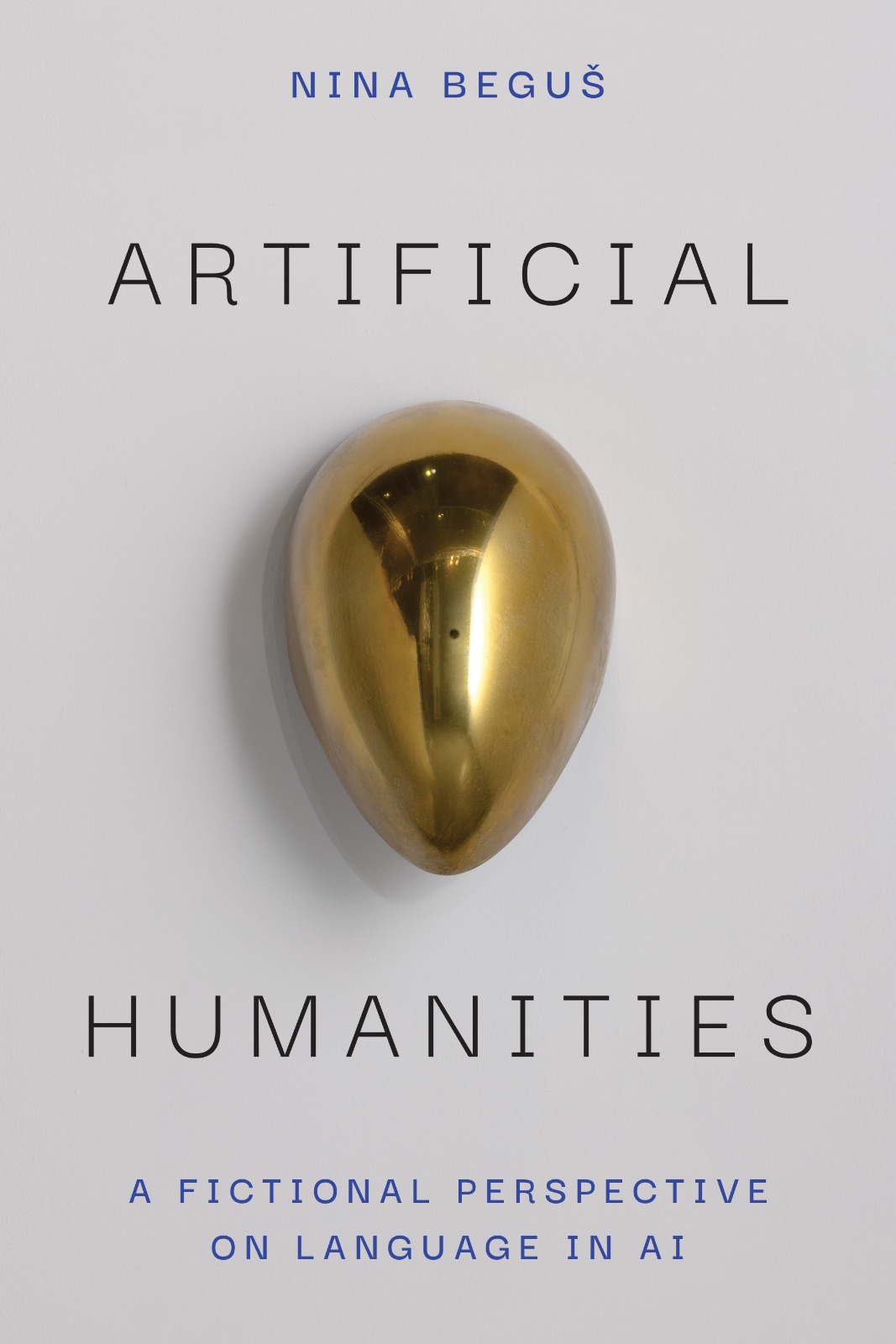
Some technologies develop implicitly out of the immense cultural power of fictional imaginaries which, once produced and disseminated, tend to be removed and to disappear. One of these, as Beguš has shown, is the Pygmalion myth, that since antiquity has been read and interpreted as an attempt to explain the desire to generate and create inherent in the human being: a kind of imaginative matrix that continues to give shape and meaning to the way we think, design, and narrate AI. To take a concrete example, in contexts such as medical technologies, care work, or emotional support, where machines must be conceptualized as non-human entities, the artificial humanities can intervene to recognize and account for the intrinsic anthropomorphization that users tend to project, and to operate accordingly with greater awareness of its consequences.
From this perspective, fiction can become an occasion to ask ourselves how to improve the technologies that are part of our lives, and can help us define regulations and values for their use. This does not mean treating it merely as a kind of prophetic tale, but making it a tool of research and knowledge for tracing and investigating territories still unexplored. In other words, storytelling serves not so much to predict the technologies to come as to decide which ones we want, and on what terms.
Nor should we forget that the technologists who design and build these machines, influenced by the culture in which they grew up and by their personal convictions, project their concepts and their way of seeing the world into the tools themselves. The fact, for example, that AI understands and replicates human language according to a computational, mechanistic vision is the direct consequence of a cultural convention that equates language with thought, and reason with calculation. A vision which, however, fails to take into account that language is an embodied phenomenon, grounded in bodily experience, social relations, and cultural stratifications, not reducible to a linear algorithm or to a mere vehicle for expressing thoughts. To become aware of this dimension of language means recognizing, as Beguš notes, that the machines that produce it are not merely technical instruments but genuine “cultural machines”: by reworking the data on which they have been trained, they return to us imitations of our artifacts along with the values and, above all, the biases embedded in them. Comparative literary studies could offer a disciplinary field capable of relating different languages, literatures, cultures, and practices, showing how such stratifications converge in AI systems, which remain, in the last analysis, the product of historically and culturally situated human decisions and interactions.
Ultimately, as Beguš writes, the artificial humanities arise as a response to the exclusion of the human sciences from the concrete making of technologies, and of AI in particular, even though humanists and engineers often ask themselves the same questions. From different perspectives, certainly, but for that very reason complementary ones. The challenge Beguš poses, then, is to bring into collaboration those who reason in the abstract about what a technology ought to be and those who build it by reasoning, in concrete terms, about what it can and could be. A challenge that embraces and makes explicit the need to build technologies that do not merely multiply computing power, but that can take root in the culture from which they come and give back something of the complexity of human experience.